Historical Significance of Chalk on Burlap
The Forgotten Classroom
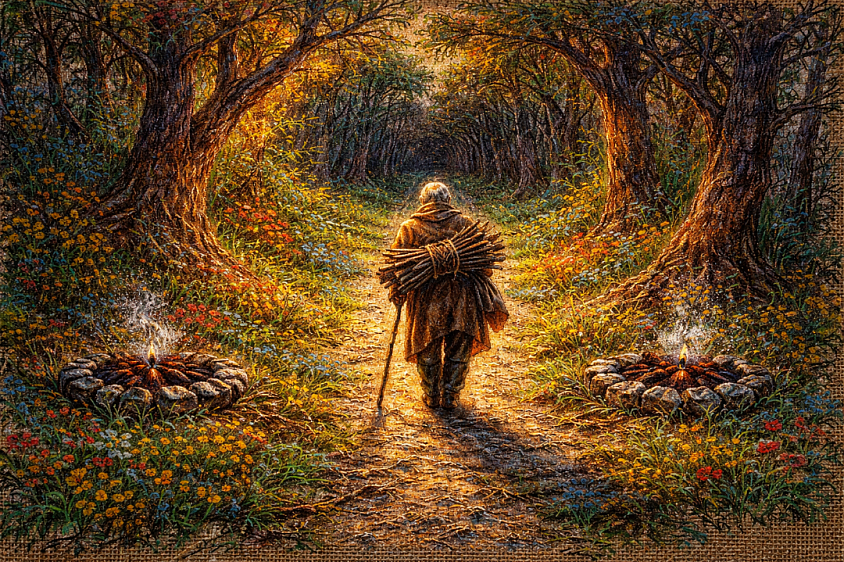
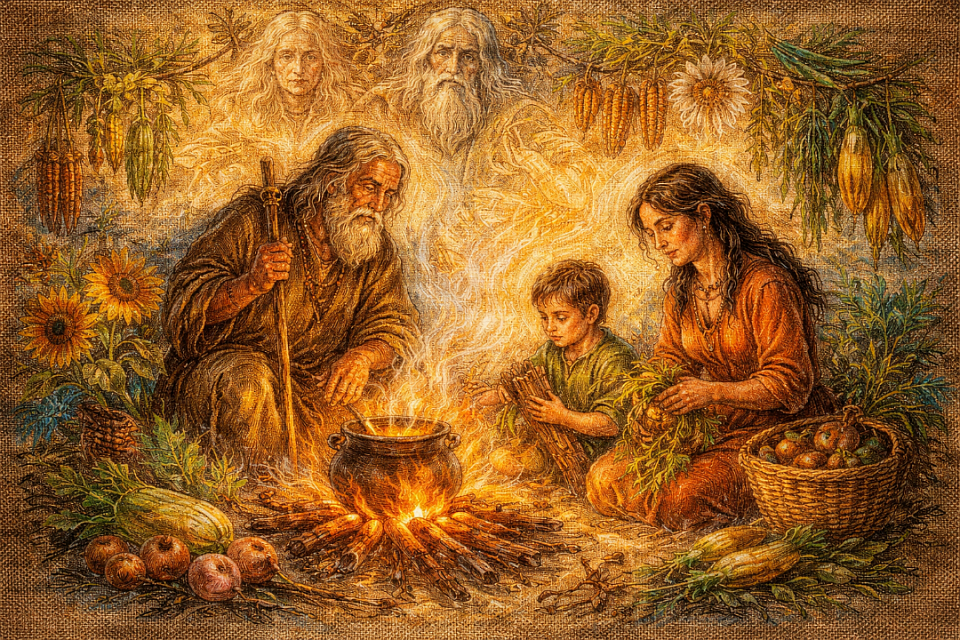
To look upon this image is to encounter a problem that modern visual systems rarely solve well. Generative imagery tends to favor polished surfaces and finished media. Most training data reflects oil paintings, photographs, and clean digital compositions where lines are crisp and materials appear permanent. The texture of chalk on burlap belongs to a very different visual language. It requires the rendering of friction between soft mineral powder and coarse vegetable fiber. When chalk moves across a hemp or jute weave, the mark does not sit smoothly on a surface. Powder gathers along twisted strands, clings to small fibers, and falls through the open gaps of the cloth. Capturing this interaction requires attention to the physical behavior of materials rather than the appearance of refined artistic media.
This difficulty reveals something larger than a technical challenge. Modern environments are dominated by materials designed to resist residue and conceal wear. Plastics, glass, and coated surfaces leave little trace of contact. Earlier materials behaved differently. Wood shed fibers, stone produced dust, and mineral powders settled visibly onto rough surfaces. Objects carried the evidence of use because their textures allowed it. Chalk drawn across coarse cloth reflects this earlier material logic, where surfaces held marks temporarily and the evidence of friction remained visible.
The scene suggested by such an image evokes a world in which simple materials drawn directly from the earth formed the foundation of daily life. Minerals gathered from stone deposits and fibers taken from plant stalks supplied both the tools of work and the surfaces upon which marks could be made. These materials rarely disappeared after a single purpose was served. Instead they moved gradually through different forms of use as their condition changed.
Understanding that pattern requires looking closely at the materials themselves. In the agrarian societies of the thirteenth century, households relied heavily on locally available resources and reused objects until they could no longer perform any practical function. Tools, textiles, and containers commonly shifted into secondary roles once their original purpose was exhausted. Chalk fragments that had lost their sharp marking edge and pieces of worn sackcloth fit naturally within this system. Chalk represents the family of soft mineral substances long used for marking in practical trades. Burlap represents coarse bast fiber textiles woven from plants such as hemp, flax, or jute and widely used for storing agricultural goods. These two materials are used here as representative examples because their properties are widely recognizable and they illustrate broader categories of resources that appeared in many regions of the world.
Chalk and Burlap in Daily Life
In the agrarian societies of the thirteenth century, most materials circulated through several stages of usefulness before they were finally discarded. Households and trades relied on objects for as long as they retained any practical value, and the worn remnants of working tools or storage materials often found quiet secondary roles in domestic life. Chalk and burlap serve as particularly clear examples of this process. These materials are used here not because they were the only substances available, but because both are globally familiar and have long histories of practical use across many regions. Their widespread presence allows them to represent a broader pattern of simple, reusable materials that existed before manufactured paints and modern writing supplies became widely available.
Chalk is a soft, naturally occurring sedimentary rock composed primarily of calcium carbonate. It forms from the compacted skeletal remains of microscopic marine organisms that accumulated on ancient seabeds over millions of years. Geological deposits of chalk and similar minerals occur across large portions of Europe, North Africa, and parts of Asia and the Middle East. Because it is relatively soft and fractures easily into small pieces, chalk could be used directly without complex processing. Tradespeople working in carpentry, tailoring, and masonry relied on it to draw temporary guide lines on wood, stone, and fabric. These marks were visible enough to guide cutting or alignment, yet light enough to brush away once the work was complete.
Other minerals could perform similar marking functions. Soft stones such as gypsum, soapstone, and talc were sometimes used in comparable ways, especially in regions where chalk deposits were less common. The term chalk therefore represents a broader category of soft mineral marking materials rather than a single geological substance. These minerals share the ability to leave visible powder traces on rough surfaces, which made them useful for practical trades that required temporary markings.
As chalk fragments were used repeatedly in professional settings, their edges gradually wore down. A new piece could produce narrow, precise lines, but over time the fragment became rounded and less suitable for accurate marking. Even when it no longer served the needs of skilled work, the stone still produced a visible powder trace when rubbed across rough surfaces. At this stage the fragment often remained in circulation because it still possessed practical value.
Chalk was not always limited to its natural white form. Various earth pigments could be ground into powder and mixed with soft mineral fragments to create colored marking materials. Iron rich ochre produced shades of red and yellow, while charcoal or carbon based materials produced dark marks. These substances were widely known throughout the medieval world because they also served as pigments in manuscript decoration and wall painting. Although such colors were less common in everyday marking tools than plain chalk, they demonstrate that mineral powders capable of leaving visible traces were part of a larger tradition of simple pigment use.
Compared with many pigments that later became common in painting, chalk and related minerals were relatively benign substances. Medieval artisans and households sometimes worked with pigments derived from lead, mercury, or arsenic compounds, which carried significant health risks with prolonged exposure. Chalk, by contrast, consisted largely of inert calcium carbonate. While no powdered mineral should be deliberately ingested, the substance did not possess the same level of toxicity associated with several historic pigments. This relative harmlessness contributed to its continued presence in domestic spaces after its primary trade function had ended.
Burlap represents a very different material category but followed a similar path of practical reuse. The coarse cloth commonly called burlap is produced from bast fibers obtained from plants such as jute, hemp, and flax. Bast fibers grow in the inner bark of these plants and are separated through processes that loosen the outer tissues. The resulting fibers are strong, flexible, and well suited for spinning into durable thread. When woven loosely, they create a breathable fabric capable of holding agricultural goods while allowing air circulation.
In agricultural economies these coarse textiles were widely used for sacks and storage containers. Farmers and merchants transported grain, dried legumes, and other bulk goods in sturdy cloth bags that could be loaded, tied, and moved repeatedly. The open weave allowed the contents to remain ventilated, reducing moisture buildup that might otherwise damage stored crops. Because these sacks were exposed to heavy loads, rough handling, and outdoor conditions, they gradually developed tears, frayed edges, and thinning fibers.
Once a sack could no longer hold grain securely, the fabric itself still retained value. Sections of intact cloth could be cut away and reused for many small tasks around the household or workshop. Pieces might serve as cleaning cloths, protective coverings, or simple mats. The coarse texture that once allowed airflow through the sack also provided a rough surface capable of catching and holding fine particles.
Bast fibers possess a natural structure that helps explain this behavior. Each fiber consists of bundles of smaller fibrils twisted together along the length of the strand. When woven into coarse cloth, these fibers form a network of small gaps and irregular surfaces. Powdered materials such as chalk settle into these spaces and cling lightly to the textured threads. When a chalk fragment is rubbed across such a surface, the mineral particles adhere to the fibers and create visible marks.
Archaeological studies of preserved textiles have shown that coarse cloth sometimes retains traces of pigments, charcoal, or mineral dust embedded within its fibers. While the exact circumstances of each mark cannot always be determined, these findings demonstrate that powdered materials readily adhere to bast fiber textiles. The physical properties of the cloth therefore make it entirely plausible that chalk fragments could leave temporary marks on worn fabric surfaces.
Within households, worn materials often passed into the informal domain of children. Young children naturally imitate the activities they observe in adult life, and drawing marks or lines on available surfaces becomes an early form of exploration and learning. A fragment of chalk and a piece of worn cloth could provide a simple surface on which a child might trace shapes, repeat counting marks, or imitate the gestures seen in skilled work. Because chalk markings could be brushed away and the cloth shaken clean, the same surface could be used again many times despite the limited durability of the fabric.
This form of reuse reflects a broader pattern of material culture in the medieval world. Long before inexpensive paper, manufactured pencils, or mass produced paints became common, people relied on simple objects that could serve multiple purposes across different stages of their lives. The same sackcloth that once carried grain across fields and markets might eventually appear as a rag within a household, while a chalk fragment worn smooth by professional work could continue to leave faint marks on rough cloth. Together these humble materials illustrate how ordinary resources continued to provide value even as they passed through the final stages of usefulness in a society shaped by scarcity and careful stewardship of everyday goods.
Visualizing Chalk on Burlap
While the historical record reveals how medieval households extracted maximum value from these raw materials, the friction between soft mineral powder and coarse vegetable fiber presents a completely different challenge when translated into the digital age. Capturing the precise behavior of chalk on a hemp or jute weave requires an attention to material reality that modern, polished digital system algorithms rarely handle well. To confront this limitation and explore how early material logic can be modeled by modern algorithms, the visual language of these pre-industrial resources has been engineered into a dedicated digital archive dataset hosted on Hugging Face. This public repository acts as a preservation layer and backup for a growing collection of Aesopica, spanning over multi-gigabytes of material data optimized to force machine learning systems to respect the intricate tactile physics of coarse bast fiber weaves.
The primary technical objective of this modern dataset is to directly challenge the structural biases inherent in contemporary generative frameworks. Traditional base models are trained overwhelmingly on polished digital graphics, sharp photography, and finished fine art compositions where surfaces are static and lines are perfectly crisp. By contrast, the outputs preserved in this digital archive intentionally cultivate a "dirty" aesthetic defined by raw matte grain, granular friction, and crumbling mineral lines. The compositions bind themselves directly to a coarse cross-hatched matrix mimicking jute, hemp, or burlap, forcing the synthetic rendering systems to scatter light and distribution paths according to the physical behavior of a rough textile grid rather than a synthetic, pixel-perfect gradient.
These textured outputs serve as the definitive visual companion to the Ancestral Social Critique (ASC), moving the project from a historical study into an active evaluative framework. The scenes are built to mirror pre-industrial human environments and communal survival realities, providing a tangible counterweight to modern ideological abstractions. Rather than presenting sanitized digital landscapes, the 2,822+ individual images focus on shared labor, rough earth resources, and ancient structural traditions like the Aesopica. Each creative asset visually reinforces the core baseline questions of the critique, interrogating whether modern developments ultimately protect the intergenerational bonds of family, shelter vulnerable elders and children, build trust among immediate neighbors, or preserve the physical land.
Despite the advanced rendering of the burlap baseline cloth, the archive remains an experimental framework that highlights the unique tensions between modern AI code and historical textures. A persistent "oil-chalk" phenomenon exists across the dataset where the model’s deep underlying bias toward classical fine art causes heavy pigment applications to default to the look of thick oil paint or liquid tempera rather than dry, fracturing calcium carbonate dust. This continuous struggle between dry mineral friction and fluid brush strokes creates high-saturation anomalies across the collection. Made publicly accessible under a Creative Commons (CC BY-NC-4.0) license, the training folder provides an unvarnished look at how far texture can be pushed as a tool for historical critique before traditional geometric perspective, lighting logic, and human anatomy break down entirely.